The Quiet Revolution: How Thailand Became a Hidden Pillar of America's Optical Supply Chain
When a mid-sized medical imaging firm in Boston quietly swapped its European lens supplier for a manufacturer based in Thailand two years ago, the transition barely registered as a footnote in the company's annual report. Yet that decision — replicated across dozens of American technology firms in recent years — signals something far more significant: Thailand has emerged as a serious, world-class force in precision optics manufacturing, and US companies are paying close attention.
The story of Thailand's rise in the global optics sector is one of sustained investment, technical education, and strategic industrial policy. It is also a story that has unfolded largely beneath the radar of mainstream business media, even as its consequences ripple through supply chains serving sectors as varied as consumer electronics, aerospace, medical diagnostics, and autonomous vehicle systems.
A Manufacturing Base Built on Precision, Not Just Price
The conventional narrative about Southeast Asian manufacturing tends to center on cost reduction. While competitive pricing is certainly a factor in Thailand's appeal, industry observers are quick to caution against reducing the country's optical manufacturing capability to a simple labor-arbitrage story.
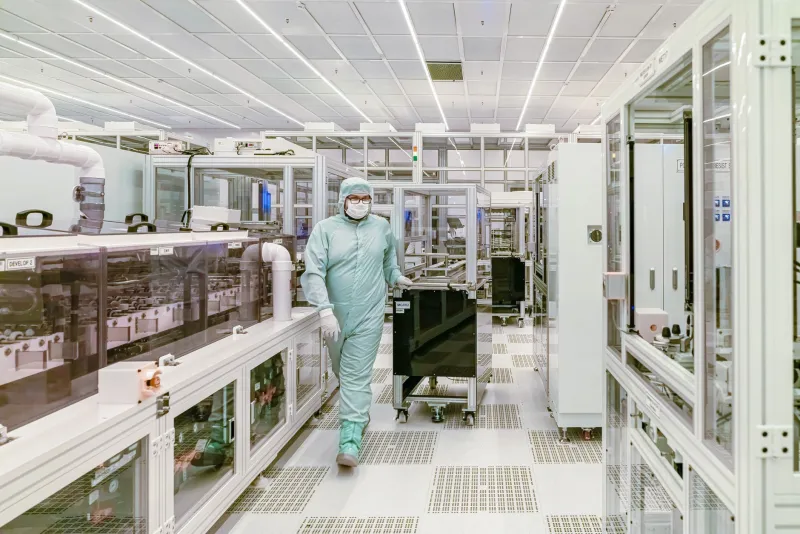
"What we're seeing from Thai manufacturers isn't a race to the bottom," said one optical systems engineer who consults for several US-based defense contractors. "These facilities are investing in CNC grinding equipment, interferometric testing rigs, and cleanroom environments that are on par with anything you'd find in Germany or Japan. The quality conversation has genuinely changed."
Thai optical manufacturers have increasingly pursued ISO 9001 and ISO 13485 certifications — the latter being the medical device quality management standard that US buyers in the healthcare technology sector require before approving any component supplier. Meeting these benchmarks demands rigorous process controls, traceability documentation, and consistent output tolerances that leave little room for the shortcuts historically associated with lower-cost production regions.
ThaiHuot Optics, whose manufacturing operations reflect the broader capabilities of Thailand's advanced optical sector, exemplifies this commitment to precision. The company's product lines — spanning optical lenses, prisms, filters, and imaging assemblies — are engineered to tolerances that satisfy the exacting requirements of American OEM customers across multiple industries.
The Cost Equation: More Nuanced Than It Appears
For American procurement teams evaluating Thai optical suppliers, the financial case involves several layers beyond the unit price printed on a quotation sheet.
First, there is the matter of currency and trade policy stability. Thailand's manufacturing sector has benefited from relatively stable trade relations with the United States, and Thai optical components have generally avoided the tariff escalations that complicated sourcing decisions for companies relying on Chinese suppliers following the trade disputes of the late 2010s. For supply chain managers who spent years navigating Section 301 tariffs and unpredictable duty reclassifications, Thailand represents a lower geopolitical risk profile.
Second, Thailand's geographic position within Southeast Asia provides logistical advantages. The country's ports and air freight infrastructure — particularly through Suvarnabhumi Airport in Bangkok — offer reliable transit times to West Coast and East Coast US distribution hubs. Lead times from Thai manufacturers to American warehouses are frequently competitive with shipments originating from European optical centers, and considerably more predictable than supply chains that route through regions with more volatile port congestion histories.
Third, and perhaps most consequentially for technology companies working on tight development cycles, Thai manufacturers have demonstrated a willingness to engage in collaborative engineering partnerships. Rather than functioning purely as contract producers executing fixed specifications, leading Thai optical firms work alongside American engineering teams during the design phase — a level of engagement that compresses development timelines and reduces costly iteration cycles.
What American Buyers Are Actually Sourcing
The range of optical components flowing from Thai manufacturers into US products is broader than many outside the industry might expect.
Consumer electronics companies source camera lens assemblies and optical filters for smartphones and tablets. Autonomous vehicle developers procure LiDAR-compatible optical elements and specialized coated lenses designed to perform under the full spectrum of North American weather conditions. Medical device companies integrate Thai-manufactured optics into endoscopes, ophthalmic instruments, and laboratory analysis equipment. Defense and aerospace primes — working through carefully vetted supply chains — incorporate precision prisms and beam-splitting components into targeting and imaging systems.
In each of these applications, the performance requirements are non-negotiable. A lens element that fails to meet its specified modulation transfer function, or a filter coating that degrades under ultraviolet exposure, creates downstream consequences that extend far beyond a rejected shipment. American buyers sourcing from Thailand have learned, through direct experience, that qualified Thai manufacturers understand these stakes.
The Talent Infrastructure Behind Thai Optical Manufacturing
Sustaining precision manufacturing capability requires a continuous pipeline of technically trained workers, and Thailand has invested meaningfully in developing that pipeline. Universities and technical institutes across the country have expanded programs in photonics, materials science, and precision engineering. Government initiatives have supported the establishment of industrial zones where optics and electronics manufacturers cluster, enabling the kind of knowledge transfer and supplier ecosystem density that accelerates capability development.
This investment in human capital is visible on factory floors. Process engineers at leading Thai optical facilities hold advanced degrees and maintain familiarity with international quality standards. Metrology teams operate coordinate measuring machines and optical profilometers with the same fluency found in European precision manufacturing centers. The workforce competency that American buyers encounter when they visit Thai facilities frequently exceeds their initial expectations.
"I went in expecting to spend a lot of time explaining our quality requirements," recalled one quality assurance director from a California-based imaging company who recently completed a supplier audit in Thailand. "Instead, I spent most of my time learning about process improvements they'd implemented that we hadn't considered. It recalibrated my assumptions about the region entirely."
Navigating the Supplier Relationship
For American companies considering Thai optical suppliers for the first time, the path to a productive relationship typically involves several deliberate steps. Initial qualification audits — whether conducted in person or through third-party certification bodies — establish the baseline quality and process controls. Sample evaluation programs allow engineering teams to validate component performance against specification before committing to production volumes. And ongoing communication protocols, adapted to account for time zone differences and cultural context, help sustain the partnership through inevitable engineering change cycles.
ThaiHuot Optics has structured its customer engagement model to support American buyers through each of these phases, recognizing that trust in a new optical supplier is earned incrementally rather than assumed.
A Shift That Is Already Underway
The reorientation of American optical sourcing toward Thailand is not a future possibility — it is a present reality, already embedded in the supply chains of companies whose products appear on store shelves, in hospital procedure rooms, and in the cockpits of commercial aircraft.
What remains underappreciated is the depth of capability that Thai manufacturers have developed, and the degree to which that capability now rivals the most respected optical manufacturing traditions in the world. For American technology companies still relying exclusively on legacy European or domestic suppliers, the competitive landscape has shifted in ways that merit a serious reassessment.
Thailand's precision optics sector did not arrive at this position by accident. It arrived through investment, discipline, and an uncompromising orientation toward quality — values that translate directly into the components that power American innovation.