Hidden in Plain Sight: The Thai-Made Optical Components Inside America's Most Essential Devices
Most Americans never think about where the optics in their devices come from. They unlock their phones with facial recognition, receive a precise cancer diagnosis through an endoscopic camera, or scan a document at the office without a second thought about the intricate glass and polymer elements making those actions possible. Yet embedded within each of these interactions is a quiet but consequential truth: a significant share of the precision optical components enabling modern American life are designed, ground, coated, and assembled in Thailand.
This is not a peripheral role. Thailand has developed a sophisticated optical manufacturing ecosystem — one that serves some of the world's most demanding industries, from consumer electronics to advanced medical instrumentation. Understanding what, specifically, comes out of Thai facilities helps clarify why this supply chain relationship matters and why it will only deepen in the years ahead.
The Anatomy of a Modern Optical Component
Before tracing Thailand's contributions, it is worth establishing what "optical components" actually encompass. The term covers a broad spectrum of precision-engineered elements: spherical and aspheric lenses, optical prisms, bandpass and neutral density filters, beam splitters, diffraction gratings, protective cover glass, and anti-reflective coatings, among others. Each serves a distinct function, and each demands extraordinary manufacturing precision — tolerances measured in nanometers rather than millimeters.
Thailand's optical manufacturing sector has matured to the point where it handles nearly every category in this taxonomy. The country's facilities are not merely assembling components sourced elsewhere; they are grinding raw optical glass, applying multilayer vacuum coatings, and performing interferometric quality testing that meets ISO and MIL-SPEC standards.
Smartphone Cameras: A Lens-by-Lens Breakdown
The modern smartphone camera module contains between five and nine individual lens elements, each with a specific refractive index and surface curvature engineered to minimize aberration and maximize light transmission. The flagship devices sold by major American brands — the phones consumers upgrade every two to three years — rely on supply chains that run directly through Southeast Asia, with Thailand occupying a critical node.
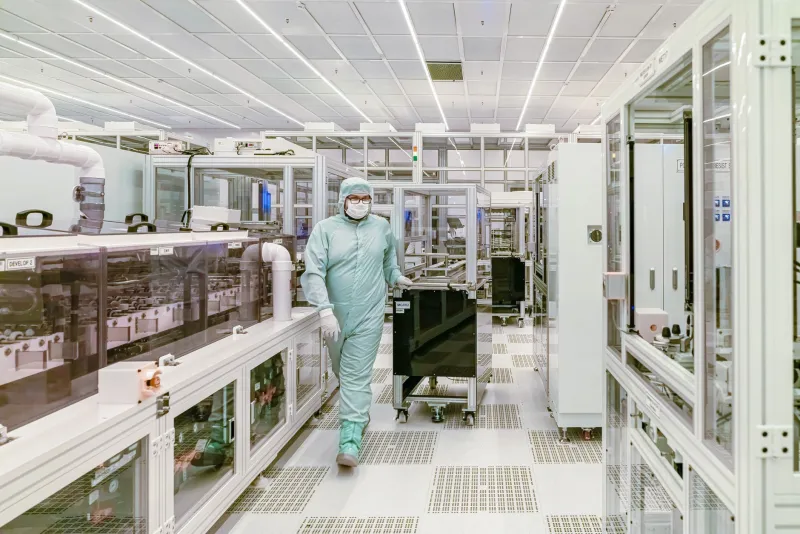
Thai manufacturers have become particularly proficient in producing aspheric plastic and glass-hybrid lens elements for compact camera modules. These components are extraordinarily difficult to fabricate consistently; even microscopic surface deviations degrade image quality. Thai facilities producing these elements operate cleanrooms rated at ISO Class 5 and 6, employ automated optical inspection systems, and maintain yield rates competitive with manufacturers in Japan and Germany.
Beyond the lens elements themselves, the infrared cut filters that prevent sensor color distortion and the cover glass protecting the front element are also produced in Thailand for global OEM customers. When an American consumer photographs a sunset with a device from a leading brand, the optical path that captures that image very likely passes through Thai-manufactured glass.
Medical Optics: Where Precision Becomes Life-Critical
Perhaps nowhere is the quality of Thai optical manufacturing more consequential than in medical imaging. Surgical microscopes, endoscopes, ophthalmic diagnostic instruments, and pathology imaging systems all depend on optical assemblies that must perform flawlessly under sterile, high-stakes conditions.
Thai manufacturers have established a strong presence in the production of rod lenses and relay lens systems used in rigid endoscopes — the slender instruments that allow surgeons to visualize internal anatomy without open incisions. These components require exceptional optical clarity, resistance to autoclave sterilization cycles, and dimensional stability over thousands of procedures. Meeting those requirements is not a matter of approximation; it demands exacting process control at every stage of fabrication.
Similarly, ophthalmic equipment used in American clinics and hospitals — slit lamps, fundus cameras, optical coherence tomography systems — incorporates precision prisms and specialized filter assemblies that are increasingly sourced from Thai suppliers. As American healthcare providers face cost pressures while refusing to compromise on diagnostic accuracy, Thai-manufactured medical optics offer a compelling value proposition: quality that rivals European and Japanese alternatives at pricing that supports broader clinical deployment.
Industrial and Defense-Adjacent Applications
Beyond consumer and medical markets, Thai optical manufacturing feeds into industrial machine vision, barcode scanning, laser systems, and certain defense-adjacent applications. Machine vision cameras installed on American factory floors — inspecting semiconductor wafers, guiding robotic assembly, reading product labels at high speed — frequently incorporate Thai-made telecentric lenses and precision optical filters.
The growth of LiDAR technology, used in autonomous vehicle systems and industrial mapping, has created new demand for collimating lenses, beam-shaping optics, and narrow bandpass filters that isolate the specific wavelengths LiDAR systems emit and detect. Thai manufacturers have moved aggressively into this segment, recognizing that the autonomous vehicle industry's eventual scale will require an optical supply chain far larger than Japan or Germany alone can support.
The Manufacturing Infrastructure Behind the Components
What enables Thailand to compete at this level? Several structural factors converge. The country has invested substantially in technical education, producing engineers and opticians with deep expertise in optical fabrication. Its geographic position within the broader Asian electronics supply chain allows for rapid logistics integration with component suppliers in Japan, Taiwan, and South Korea. And decades of foreign direct investment from Japanese optical companies — who established Thai production facilities beginning in the 1980s — created a knowledge transfer that has since evolved into indigenous Thai manufacturing capability.
Government policy has reinforced these advantages. The Thailand Board of Investment has consistently prioritized high-technology manufacturing, offering incentives that have attracted continued capital investment in optical and photonics production. The result is a cluster of manufacturers capable of serving the full range of optical complexity, from commodity camera glass to ultra-precision optics for scientific instrumentation.
Rethinking "Made in America's Devices"
For American consumers and procurement professionals alike, the story of Thai optical manufacturing invites a recalibration of assumptions. The devices and instruments Americans depend on are global collaborations, and Thailand's contribution to the optical layer of that collaboration is both substantial and growing.
At ThaiHuot Optics, this reality forms the foundation of our commercial identity. We source and supply optical components and equipment that reflect the full depth of Thai manufacturing capability — components that are not second-tier alternatives but genuine precision products meeting the standards demanded by competitive global markets. The next time you use your smartphone camera, consult with a physician who relies on endoscopic imaging, or watch an autonomous vehicle navigate a complex intersection, consider the optical engineering making it possible. There is a meaningful chance that engineering originated in Thailand.