When Tolerance Is a Tradition: The Engineering Philosophy Behind Thailand's Sub-Micron Optical Manufacturing
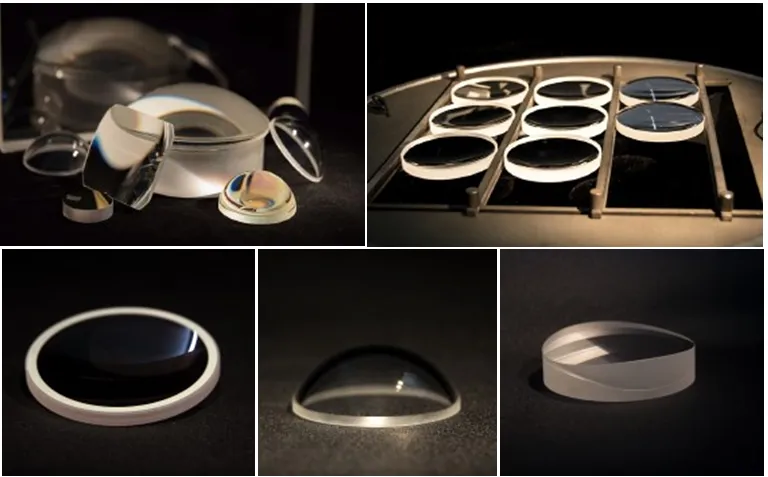
Photo: Catherin Song, CC0, via Wikimedia Commons
The Tolerance Gap Nobody Talks About
In optical manufacturing, a single micron—one millionth of a meter—can be the difference between a functional component and a rejected one. For most of the twentieth century, American and German facilities defined the upper limits of what precision optics manufacturing could achieve. By the early 2000s, however, a quiet retreat had begun. Rising labor costs, the consolidation of domestic defense contracts, and the gradual exit of skilled opticians from the workforce pushed many U.S. facilities away from the most demanding tolerance work. What remained was a capability gap—and Thai manufacturers moved into it with a degree of methodical preparation that the broader industry has only recently begun to appreciate.
Today, optical facilities operating within Thailand's established manufacturing corridors routinely hold surface form tolerances below 0.1 microns and centration errors under 30 arc-seconds on production runs that would have been considered boutique work a decade ago. This is not an accident of geography or labor arbitrage. It is the product of a manufacturing philosophy that treats precision as a foundational commitment rather than a line item to be optimized against.
What American Factories Gave Up—and Why
To understand why Thai manufacturers now hold an advantage in extreme-tolerance optical work, it helps to understand the economics that eroded American capacity. Precision optics, particularly for scientific, medical, and defense applications, demands not only advanced equipment but sustained institutional knowledge. Master opticians require years of apprenticeship-style training. Metrology infrastructure—interferometers, profilometers, coordinate measuring machines—must be maintained to standards that themselves demand rigorous calibration protocols.
For American manufacturers competing in a cost-driven commercial market, the return on that investment became increasingly difficult to justify. When a facility could source acceptable-quality lenses from lower-cost suppliers and redirect capital toward higher-margin assembly or software work, many did exactly that. The precision end of the spectrum was quietly abandoned, outsourced, or consolidated into a handful of specialized shops serving defense primes at volumes too small to sustain a deep talent pipeline.
Thai facilities, entering the precision optics market in a different economic moment and with a different strategic orientation, did not inherit those tradeoffs. They built for precision from the ground up, often in partnership with Japanese and German equipment suppliers who transferred not just machinery but methodology.
Precision as Institutional Culture
Engineers who have worked inside Thai optical facilities frequently describe a quality culture that differs from Western counterparts in ways that are difficult to quantify but immediately apparent on the production floor. One optical systems engineer with experience across facilities in California, Germany, and Thailand noted that the difference is less about individual skill than about how quality standards are embedded in daily workflow.
"In a lot of Western shops, precision is something you achieve at the end—you inspect and you either pass or you scrap," the engineer explained. "In the Thai facilities I've worked with, precision is built into every step. The operators aren't waiting for a QC checkpoint. They're measuring continuously, and they understand why the measurement matters."
This orientation has structural roots. Thai optical manufacturers, particularly those that grew up supplying Japanese optical companies, were trained in production systems that emphasized in-process control rather than end-of-line inspection. The philosophy, familiar to anyone who has studied Toyota-derived manufacturing methodologies, treats defect prevention as categorically superior to defect detection. Applied to optics, this means that tolerance management happens at the grinding stage, the polishing stage, the coating stage, and the assembly stage—not solely at final inspection.
The practical result is a yield rate on tight-tolerance components that consistently outperforms what comparable Western facilities report, according to procurement engineers at several U.S. optical systems integrators who spoke on background.
The Metrology Infrastructure That Makes It Possible
Culture alone does not hold a tolerance. The physical infrastructure required to manufacture and verify sub-micron optical components is substantial, and Thai facilities have invested in it at a scale that surprises many Western visitors encountering the industry for the first time.
Modern Thai optical production facilities typically operate temperature-controlled metrology rooms where ambient conditions are held to within fractions of a degree Celsius. Vibration isolation is standard. Phase-shifting interferometers capable of measuring surface form to nanometer resolution are common capital equipment rather than specialized assets shared across a facility. In some facilities, automated in-line measurement systems have been integrated directly into polishing cells, allowing real-time feedback that would have been technically impossible even fifteen years ago.
This level of investment reflects a long-term strategic calculation. Thai manufacturers competing at the precision end of the optical market understood early that the barrier to entry was not price—it was demonstrated capability. Winning contracts from U.S. defense suppliers, medical device companies, and scientific instrument manufacturers required the ability to provide measurement data that those customers could independently verify. Building the metrology infrastructure to generate that data was a prerequisite, not an afterthought.
What Western Companies Discover When They Look Closely
For American companies evaluating Thai optical suppliers for the first time, the experience often involves a recalibration of expectations. Engineers accustomed to treating offshore sourcing as a cost-reduction exercise frequently encounter something different: suppliers who engage technical specifications with a depth of understanding that reframes the conversation from price negotiation to engineering collaboration.
This dynamic has particular implications for companies working on next-generation imaging systems—whether for autonomous vehicles, advanced medical diagnostics, defense electro-optics, or quantum sensing applications. In each of these domains, the tolerance requirements have been trending tighter as system architectures push the limits of what optical components can achieve. For U.S. companies navigating that landscape, the question is no longer whether to source precision optics internationally. It is which international sources have the engineering depth to be genuine partners in the development process.
Thai manufacturers have positioned themselves to answer that question affirmatively, and the evidence is visible in the design-in wins they have accumulated across American defense and commercial programs over the past decade.
The Strategic Implication
The precision paradox at the center of this story is straightforward: the manufacturing work that American factories found economically inconvenient became the foundation on which Thai optical producers built a durable competitive position. What was abandoned as a cost burden was embraced elsewhere as a philosophical commitment—and that commitment, sustained over two decades of investment and institutional development, now represents a structural advantage that is not easily replicated.
For U.S. companies that depend on precision optics—and that list grows longer with every advance in photonics, imaging, and optical sensing—understanding where that capability now resides is not an academic exercise. It is a supply chain imperative. The facilities holding the tolerances that matter most are operating in Thailand, and they are doing so with a consistency and a technical seriousness that the broader American market is only beginning to fully recognize.