The Stabilizer You Never See: Inside Thailand's Dominance of Smartphone OIS Manufacturing

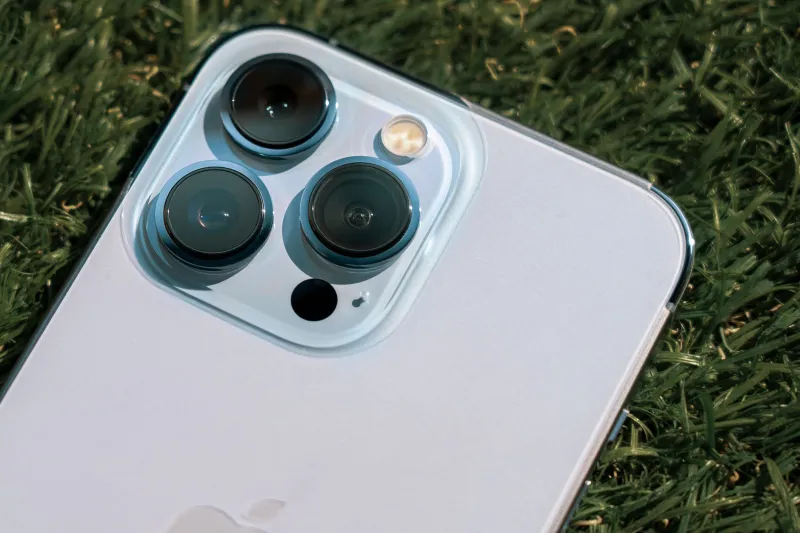
When you steady your phone to capture a low-light portrait or shoot a walking video without a gimbal, the technology compensating for your hand tremors is doing something extraordinary. In a space smaller than a thumbnail, microscopic actuators are shifting a lens element — or in some advanced systems, the image sensor itself — multiple thousands of times per second, counteracting motion vectors calculated by onboard gyroscopes in real time. It is one of the most mechanically demanding components in any consumer device. And for a significant portion of the world's flagship smartphones, that component was made in Thailand.
The story of how Thai manufacturers came to occupy this critical position is not a story of accident. It is a story of deliberate industrial investment, engineering talent development, and a geographic and logistical positioning that has made Thailand uniquely suited to the hyper-precision demands of optical image stabilization — commonly abbreviated as OIS.
What OIS Actually Requires
To appreciate why manufacturing OIS modules is so technically demanding, it helps to understand what the technology involves. A standard OIS unit integrates a voice coil motor (VCM) assembly, a suspension system of fine springs or ball bearings, position sensors, and a lens barrel — all calibrated to tolerances measured in micrometers. The entire assembly must operate reliably across extreme temperature ranges, survive repeated drops, and maintain consistent optical axis alignment despite the physical stresses of daily use.
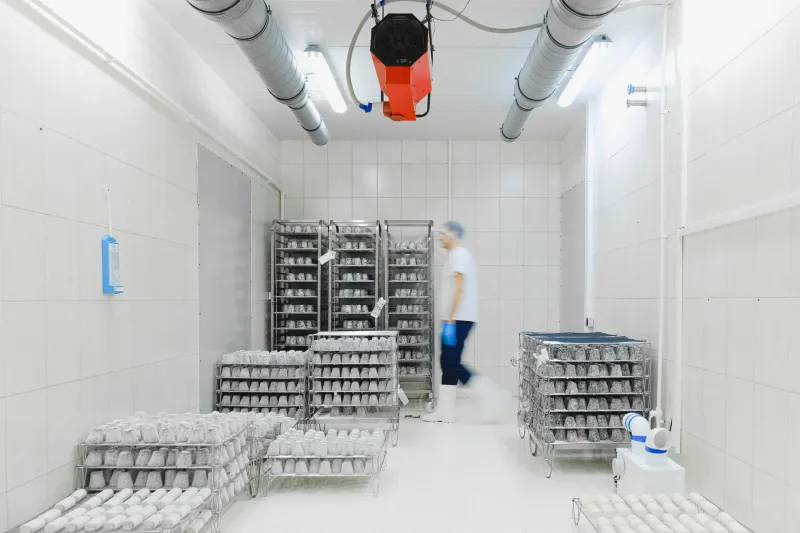
The manufacturing environment required to produce these components is correspondingly exacting. Cleanrooms rated at ISO Class 5 or better are standard. Assembly lines rely on automated vision systems capable of detecting deviations invisible to the human eye. The adhesives used to fix lens elements must cure to precise bond strengths without introducing micro-stresses that could alter optical alignment. Even minor contamination — a single dust particle in the wrong location — can render a module defective.
"The tolerances we work to are not tolerances most industries ever encounter," said one senior process engineer at a Chonburi-based optical components facility, speaking on background due to customer confidentiality agreements. "We are talking about positioning accuracy in the sub-micron range. The equipment, the training, the environmental controls — everything has to be built around that requirement from the ground up."
How Thailand Built the Infrastructure
Thailand's emergence as a hub for precision optical manufacturing did not happen overnight. The foundation was laid over decades, beginning with the country's early role in hard disk drive production — an industry that similarly demands cleanroom environments, micro-mechanical precision, and high-volume consistency. The workforce and supplier ecosystem that developed around disk drive manufacturing in Thailand's Eastern Economic Corridor proved directly transferable to optical component production.
Government investment in technical education, particularly through institutions offering programs in precision engineering and mechatronics, created a pipeline of engineers capable of operating and improving upon the automated systems these factories require. Thai Board of Investment incentives further encouraged multinational optical firms to establish or expand regional manufacturing bases in the country, bringing with them process knowledge and quality standards that local firms absorbed and, in many cases, advanced.
By the time the smartphone camera arms race began accelerating in the early 2010s — with OIS transitioning from a premium feature to a baseline expectation — Thai manufacturers were positioned to scale. They had the cleanrooms, the metrology equipment, the trained workforce, and crucially, the established relationships with the Taiwanese and Japanese component suppliers whose parts feed into OIS module assembly.
The Brands and the Supply Chain
For competitive and contractual reasons, the specific relationships between Thai OIS manufacturers and the smartphone brands whose products they supply are rarely disclosed publicly. However, industry procurement analysts and supply chain mapping exercises conducted by research firms have consistently identified Thailand as a significant source of OIS modules and subcomponents for devices sold under major American and South Korean brand names.
The supply chain typically operates through a tiered structure. A Thai facility may supply completed OIS modules to a camera module integrator — often based in China or Vietnam — which then delivers finished camera assemblies to the final device manufacturer. This layering means Thai manufacturing contributions are several steps removed from the consumer-facing brand, rendering them effectively invisible to the end user and to most supply chain reporting.
"The brands know exactly where their components come from," noted one US-based optical supply chain consultant who works with consumer electronics procurement teams. "But the public narrative around 'made in' tends to focus on final assembly. The precision component layer, which is often where the real engineering value lives, gets almost no attention."
This dynamic has created a structural dependency that US-based procurement teams are increasingly conscious of, particularly in the context of broader supply chain resilience discussions following the disruptions of recent years. Thailand's relative political stability, its established logistics infrastructure, and its positioning outside the most acute zones of US-China trade tension have made it an attractive alternative or complement to manufacturing concentrated elsewhere in Asia.
The Technical Differentiators
Beyond the foundational infrastructure, Thai OIS manufacturers have developed specific technical capabilities that reinforce their competitive position. One area is the calibration and testing of OIS modules at scale. Verifying that each unit meets stabilization performance specifications requires custom optical test benches capable of simulating motion profiles and measuring compensation accuracy across the full range of operating conditions. Thai facilities have invested substantially in developing proprietary test systems, reducing calibration cycle times while maintaining the measurement rigor that smartphone brand quality teams demand.
Another area is the integration of OIS with autofocus mechanics — a combination known as OIS+AF, or in some implementations, sensor-shift stabilization that moves the image sensor rather than the lens. These more complex architectures demand tighter integration between mechanical, electrical, and optical subsystems, and Thai engineers have accumulated considerable expertise in managing these integration challenges at production volumes.
Material science innovation also plays a role. The spring steel alloys and shape memory materials used in some suspension systems must be sourced, processed, and validated to tight specifications. Several Thai facilities have developed in-house materials testing capabilities that allow them to qualify new suspension materials faster than competitors relying on external testing services.
Implications for the US Market
For American consumers, the relevance of Thailand's OIS manufacturing position is primarily experienced as a quality baseline: the stabilization performance that US smartphone users have come to expect in devices at every price tier is, in significant part, a product of Thai manufacturing precision. When that stabilization works seamlessly — when a video shot at dusk remains smooth, when a portrait captured in a dim restaurant is sharp — the engineering behind it is drawing on capabilities developed and refined in Thai facilities.
For US companies and policymakers concerned with supply chain geography, the picture is more complex. Thailand represents a node of concentrated expertise in a technology that is increasingly central not just to consumer photography but to machine vision, augmented reality, and computational imaging applications with defense and industrial relevance. Understanding where that expertise resides, and how it is sustained, is a prerequisite for any serious assessment of optical technology supply chain risk.
The factories may not have names that appear on any product you own. But the precision they deliver is present in your pocket, operating silently, every time you raise your phone to capture a moment worth keeping.