Sharpening the Edge: How Thai Optical Factories Are Quietly Dominating the Smartphone Camera Supply Chain
The smartphone camera war is not fought in marketing departments or on trade show floors. It is decided in the tolerances of a lens element measured in microns, in the alignment of a periscope prism assembly that must survive thousands of drops, and in the calibration routines that allow a multi-sensor array to behave as a single coherent optical system. By those measures, the battle is increasingly being won in Thailand.
Over the past several years, Thai optical manufacturing facilities have positioned themselves at the center of the global smartphone imaging supply chain — not through aggressive pricing alone, but through a combination of engineering sophistication, manufacturing discipline, and logistical agility that competitors in other regions have struggled to replicate. The result is a quiet dependency: some of the most recognized smartphone brands sold in the United States rely on Thai-produced optical components for their most important camera features, even if that fact rarely appears in a press release.
The Precision Imperative
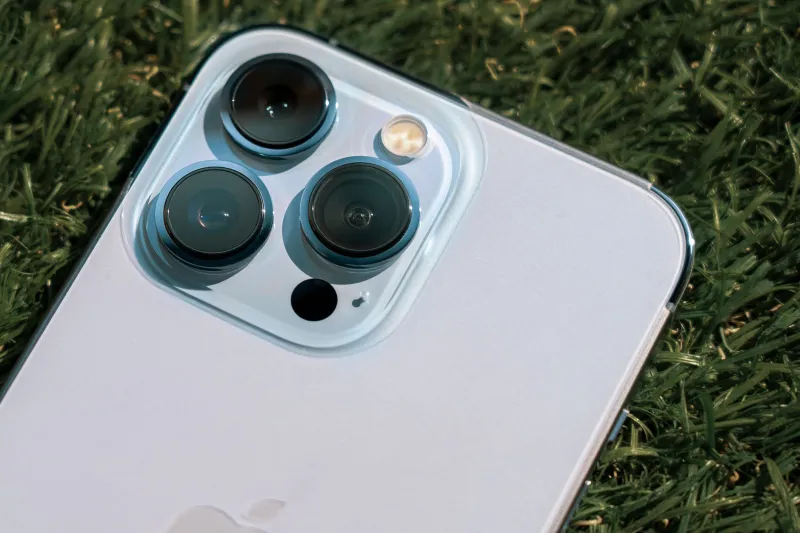
To understand why Thailand has become such a consequential player in this space, it helps to understand how dramatically the demands on smartphone optics have escalated. A flagship device sold in the US market today may incorporate three or four discrete camera modules, each with its own lens stack, image stabilization mechanism, and autofocus system. The wide-angle primary sensor must resolve fine detail at the pixel level across a large field of view. The telephoto module, often built around a periscope architecture that folds the optical path to achieve long focal lengths within a thin chassis, demands extraordinary alignment precision. And the ultrawide lens must correct for distortion across an angle of view that would challenge even dedicated camera systems.
Manufacturing these components at scale — with consistent optical performance, within the dimensional constraints of a modern smartphone, and at a cost that allows the finished device to be sold competitively — is an engineering problem of considerable complexity. Thai facilities have invested heavily in the metrology equipment, cleanroom environments, and process engineering expertise required to meet that challenge.
"The tolerance windows on periscope assemblies are genuinely extreme," said one supply chain consultant who advises US consumer electronics companies on Asia-Pacific sourcing. "You are aligning optical elements to fractions of a millimeter, and you need that alignment to hold across temperature cycling, mechanical shock, and years of use. The Thai facilities that have cracked that problem are operating at a level that is genuinely difficult to replicate quickly."
Autofocus at Scale
Among the specific capabilities where Thai manufacturers have distinguished themselves, autofocus system production stands out. Phase-detection autofocus — the technology that allows modern smartphone cameras to lock focus nearly instantaneously, even on moving subjects — depends on precise integration between the image sensor, the lens actuator, and the control electronics. Manufacturing that integration reliably, across millions of units per quarter, requires both engineering depth and production discipline.
Thai optical facilities have developed assembly and calibration processes that allow them to achieve autofocus performance specifications consistently at high volume. Industry observers note that several Thai producers have invested in proprietary calibration tooling that reduces per-unit calibration time without sacrificing accuracy — a combination that translates directly into cost and throughput advantages.
For US smartphone brands competing on camera performance as a primary differentiator, that advantage is not abstract. A faster, more reliable autofocus system is one of the features that consumers notice and that reviewers benchmark. The ability to source autofocus modules that meet performance targets at production scale, on schedule, is a competitive variable that shapes product roadmaps.
The Periscope Architecture Challenge
Periscope telephoto lenses represent perhaps the most demanding optical manufacturing challenge in the current smartphone landscape. The architecture — which uses a prism or mirror to redirect light through a horizontal lens stack before it reaches the image sensor — allows smartphone designers to achieve focal lengths equivalent to 3x, 5x, or even 10x optical zoom without requiring a camera module that protrudes significantly from the device body.
The optical alignment tolerances involved are demanding under any circumstances. In a production environment, maintaining those tolerances across thousands of units per day, with the dimensional precision required to fit within a modern smartphone chassis, adds additional complexity. Thai manufacturers that have invested in the specialized assembly equipment and process controls required for periscope production have found themselves with a capability that commands premium positioning in the supply chain.
"Periscope is where you really see the separation between facilities that have made the capital investment and those that haven't," noted one optical engineer with experience across multiple Asian manufacturing regions. "The Thai operations that are doing this well have spent years building that capability. It's not something you can catch up on quickly."
Multi-Sensor Array Calibration
Beyond individual module performance, the integration of multiple camera modules into a coherent system presents its own optical manufacturing challenge. For a smartphone to convincingly switch between wide, primary, and telephoto cameras — or to combine data from multiple sensors for computational photography features — the optical and geometric characteristics of each module must be precisely characterized and calibrated against one another.
Thai facilities have developed multi-sensor calibration workflows that allow them to deliver camera module sets with the inter-module consistency that US device makers require for seamless camera switching and computational imaging features. This systems-level calibration capability, rather than module-level performance alone, is increasingly a differentiating factor in supplier selection.
Speed, Scale, and Strategic Value
Beyond technical capability, Thai optical manufacturers offer US customers a logistical profile that has become strategically important. Thailand's geographic position, well-developed export infrastructure, and participation in regional trade frameworks allow Thai suppliers to move components to assembly facilities across Southeast Asia and to US-bound finished goods operations with a speed and predictability that matters in an industry where product cycles are measured in months.
For US smartphone brands managing tight launch windows, the ability to work with a supplier that can respond quickly to design changes, ramp production on schedule, and maintain quality through the ramp is a form of competitive advantage in itself. Thai optical manufacturers have built reputations in this area that reinforce their technical credentials.
A Structural Advantage, Not a Temporary One
The position that Thai optical manufacturing has built in the smartphone camera supply chain did not emerge from a single breakthrough or a favorable moment in currency markets. It reflects years of investment in equipment, process engineering, workforce development, and customer relationships. The facilities operating at the leading edge of this industry are not easily displaced by competitors who have not made equivalent investments.
For US smartphone brands, that reality shapes procurement strategy. Dependence on Thai optical suppliers is, in many cases, a rational response to a supply chain landscape in which Thai facilities offer a combination of capability, quality, and responsiveness that alternatives cannot fully match.
As camera systems in flagship smartphones continue to grow in complexity — with emerging features including variable aperture, improved low-light performance, and tighter integration with computational imaging systems — the demands on optical component suppliers will only increase. Thai manufacturers that have already demonstrated the ability to meet today's requirements are well positioned to remain indispensable as those requirements evolve.
In the smartphone camera wars, precision is the only currency that matters. Thailand, it turns out, has been minting it for years.