Precision at Every Scale: How Thai Optical Engineers Are Redefining What's Possible in Imaging Technology
When an American aerospace contractor needed a custom lens assembly capable of maintaining sub-micron alignment tolerances across extreme temperature fluctuations, the solution did not come from a laboratory in Silicon Valley or a workshop in Stuttgart. It came from a precision optics facility in Thailand. That outcome, once considered unlikely, is now increasingly common—and it reflects a fundamental shift in where the world's most sophisticated imaging problems are being solved.
Thailand has long been recognized as a manufacturing hub, but the country's optical engineering sector has matured well beyond contract production. Today, Thai engineers are contributing original intellectual work to some of the most technically demanding areas of modern imaging: computational photography, adaptive optics, hyperspectral sensing, and space-grade instrumentation. The trajectory is not accidental. It is the result of sustained investment in technical education, a deep manufacturing culture oriented toward precision, and a growing network of industry partnerships that connect Thai innovators directly to global demand.
The Engineering Foundation Behind the Reputation
Thailand's optical manufacturing sector developed its technical backbone through decades of supplying components to international electronics and camera manufacturers. That apprenticeship in precision—learning to hold tolerances measured in micrometers, to polish surfaces to fractional-wavelength smoothness, to assemble multi-element systems without introducing aberration—created a workforce with capabilities that extend naturally into more advanced applications.
Today, universities including Chulalongkorn, Mahidol, and King Mongkut's Institute of Technology are producing graduates with specialized training in photonics, optical design, and precision metrology. Many of these engineers go on to work within Thailand's growing cluster of optics-focused manufacturers, where they apply academic grounding to real-world production challenges. The result is a talent pipeline that combines theoretical rigor with hands-on manufacturing fluency—a combination that proves especially valuable when clients need solutions that must actually work under production conditions, not just in simulation.
Consumer Electronics: The High-Volume Proving Ground
Smartphone cameras represent one of the most unforgiving proving grounds in optical engineering. The constraints are severe: the system must be thin enough to fit inside a device a few millimeters thick, sharp enough to satisfy consumers who routinely pixel-peep their images, and manufacturable at volumes measured in tens of millions of units per year. Tolerances that would be considered acceptable in other contexts become catastrophic at this scale.
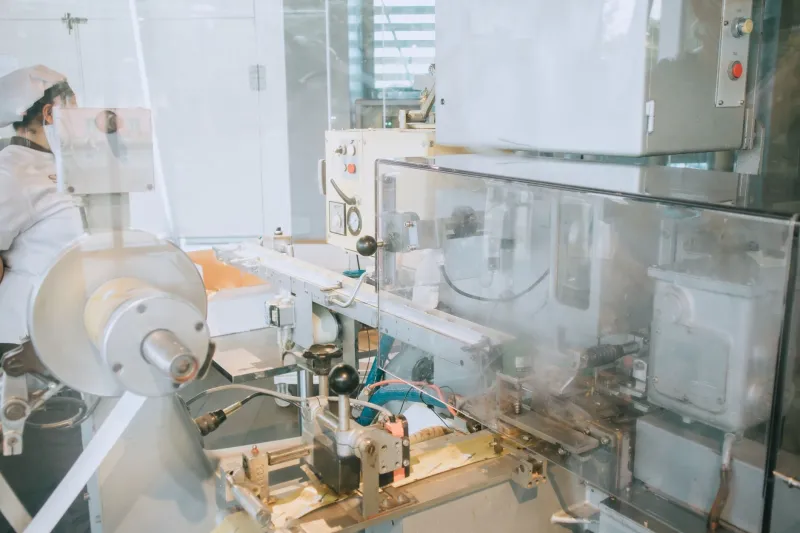
Thai optical manufacturers have been integral to meeting these demands for major consumer electronics brands. Engineers working within Thailand's production ecosystem have contributed to innovations in aspherical lens molding, anti-reflective coating uniformity, and the integration of optical image stabilization mechanisms. The knowledge accumulated through this work—particularly around high-volume precision assembly and quality verification—has proven directly transferable to more specialized applications.
One area where this transfer has been especially productive is in the development of multi-aperture imaging systems. Originally driven by smartphone manufacturers seeking to replicate zoom capability without moving parts, multi-aperture optical design has since found applications in medical imaging, autonomous vehicle sensing, and industrial inspection. Thai engineers who helped refine these systems for consumer devices are now applying the same principles to entirely different domains.
Scientific Instrumentation: Where Margins Disappear
If consumer optics is demanding, scientific instrumentation is unforgiving. A lens element destined for a ground-based telescope or an airborne hyperspectral imager must perform to specifications that leave essentially no margin for error. Surface irregularities that would be invisible and inconsequential in a camera lens can destroy the utility of a scientific instrument entirely.
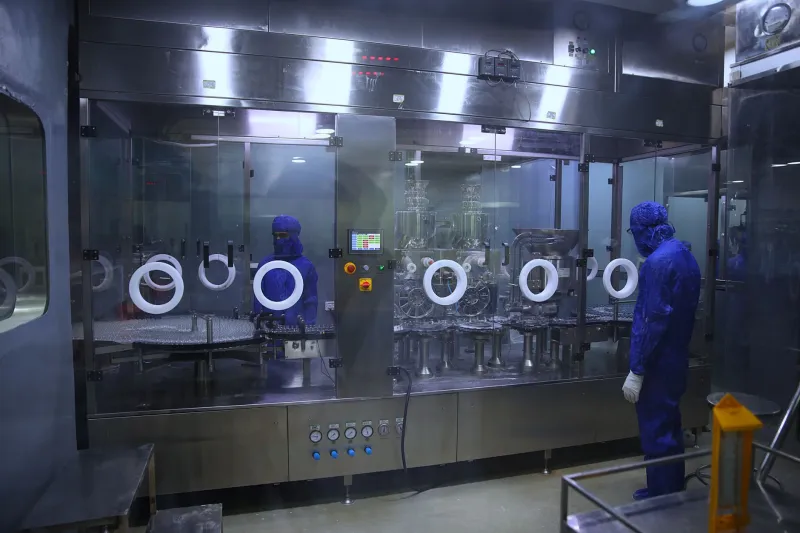
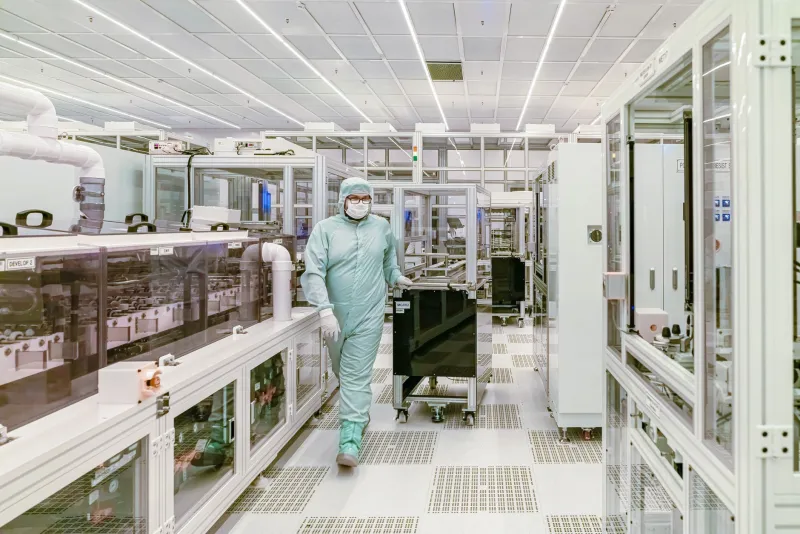
Thailand has developed credible capability in this space through a combination of advanced fabrication equipment and a quality culture that takes root-cause analysis seriously. Facilities operating within Thailand's optical manufacturing sector have invested in interferometric testing systems, coordinate measuring machines, and clean-room environments that meet the requirements of scientific and defense-grade production. The willingness to invest in metrology—the science of measurement itself—signals a maturity that distinguishes precision-oriented manufacturers from commodity producers.
For American research institutions and aerospace contractors, this capability matters enormously. Domestic sourcing for highly specialized optical components is often limited, and lead times from European suppliers can be prohibitive. Thai manufacturers that can meet scientific-grade specifications offer an alternative that combines technical credibility with logistical practicality.
Space Applications: The New Frontier for Thai Optics
Perhaps the most striking indicator of how far Thailand's optical engineering sector has advanced is its growing involvement in space-related projects. Optical systems for satellite imaging, space telescopes, and Earth observation platforms represent the pinnacle of precision manufacturing—components must survive launch vibration, thermal cycling from cryogenic cold to intense solar radiation, and the vacuum of space, all while maintaining optical performance that would be exceptional even in a controlled laboratory environment.
Thai engineers and manufacturers have begun contributing to this domain, both through direct component supply and through collaborative development projects with international partners. The specific nature of these engagements is often confidential, as is typical in aerospace supply chains, but the technical requirements involved leave no ambiguity about the level of capability being demonstrated.
This trajectory has implications that extend beyond any individual project. Space optics demand the most advanced surface figuring, the most rigorous cleanliness protocols, and the most thorough documentation and traceability of any manufacturing discipline. Manufacturers that develop competence at this level carry that discipline into every other product they make. For American companies sourcing optical components for terrestrial applications, the fact that a Thai supplier has space-grade experience in its background is a meaningful signal about overall quality orientation.
What American Companies Are Discovering
Across the US technology and research landscape, procurement and engineering teams are encountering Thai optical suppliers with increasing frequency—and, notably, with increasing satisfaction. The feedback that emerges from these relationships tends to center on a few consistent themes: technical responsiveness, willingness to engage in genuine co-development rather than purely transactional supply, and a quality discipline that holds up under audit.
For American companies navigating supply chain diversification in the wake of recent disruptions, Thailand represents a geopolitically stable and technically capable alternative or complement to other sourcing regions. The country's established trade relationships, English-language business fluency among technical professionals, and alignment with international quality standards make integration into existing supply chains relatively straightforward.
The deeper value, however, lies in what Thai optical engineers bring to the table intellectually. When a US company faces an imaging challenge that sits at the boundary of what current technology can achieve, finding a partner with genuine engineering depth—not just manufacturing capacity—is the difference between a project that advances and one that stalls.
A Partnership Built on Shared Ambition
The story of Thai optical engineering is ultimately a story about ambition meeting capability. The engineers and manufacturers driving this sector are not content to remain in the background of the global optics industry. They are pursuing original innovation, building institutional knowledge, and establishing the kind of track record that earns trust in the most demanding applications imaginable.
For American companies and research institutions working at the frontier of imaging technology, that ambition is an asset. The precision optics challenges of the next decade—whether they involve next-generation semiconductor lithography, biological imaging at the cellular scale, or observation systems that extend humanity's view of the cosmos—will not be solved by any single country or company. They will be solved through partnerships that combine the best available expertise, wherever it happens to exist.
Increasingly, that expertise exists in Thailand.