Seeing the Road Ahead: How Thai Optical Engineers Are Solving the Vision Problem at the Heart of Self-Driving Cars
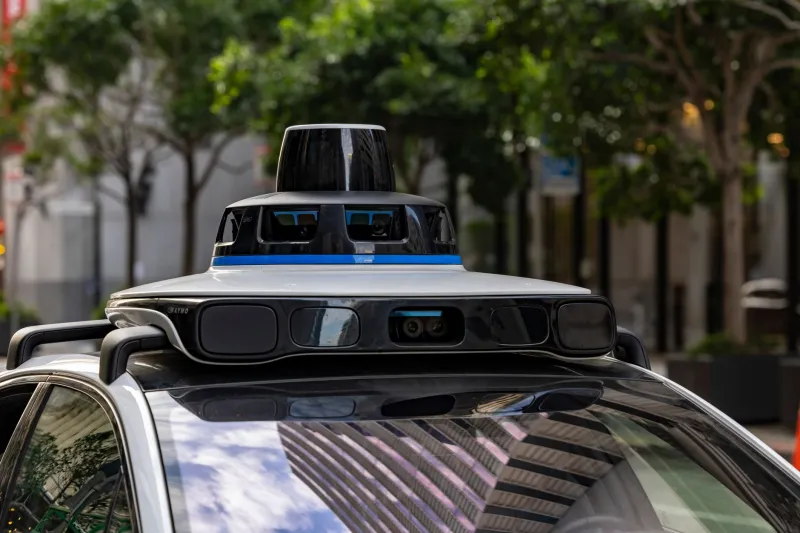
The promise of autonomous vehicles has always rested on a deceptively simple idea: give a machine the ability to see. But the gap between that concept and a deployable product has proven vast, and much of it comes down to optics. The cameras and imaging systems embedded in self-driving platforms must perform at a level that exceeds nearly any other commercial application — and increasingly, the engineers solving those problems are based in Thailand.
For American automotive technology companies navigating the complex supply chains of autonomous vehicle development, Thailand has emerged as a quiet but consequential partner. Its optical manufacturing sector, built over decades of precision work in consumer electronics and medical imaging, has adapted its capabilities to meet the rigorous demands of automotive-grade vision systems — and the results are beginning to attract serious attention from developers and integrators across the United States.
The Technical Demands No One Talks About
Most discussions of autonomous vehicles focus on software: the algorithms that interpret sensor data, the neural networks trained on millions of miles of road footage, the decision logic that determines when to brake or steer. What receives far less attention is the physical layer beneath all of that — the lenses, sensors, and optical assemblies that capture the raw visual data those systems depend on.
The requirements are formidable. Automotive camera lenses must maintain consistent image quality across an operating temperature range that can span from sub-zero winter conditions in the northern United States to the sustained heat of a Texas summer. They must resist vibration, humidity, and the particulate contamination that accumulates on any vehicle in real-world use. They must deliver high-resolution output at frame rates sufficient to support real-time object detection, with minimal distortion at the wide angles necessary to monitor adjacent lanes and intersections simultaneously.
Perhaps most critically, they must do all of this with a failure rate approaching zero. Unlike a smartphone camera that produces a blurry photograph, an autonomous vehicle camera that underperforms in a critical moment carries consequences that are categorically different.
Why Thailand Is Positioned to Deliver
Thailand's optical manufacturing industry did not arrive at automotive-grade precision by accident. The country's production facilities have spent years supplying components for applications where performance tolerances are similarly unforgiving — endoscopic imaging systems used in surgical suites, aerial reconnaissance equipment, and industrial machine vision platforms deployed in semiconductor fabrication. Each of those sectors demanded the kind of manufacturing discipline that automotive clients now require.
Thai optical engineers working on autonomous vehicle programs point to several factors that distinguish their approach. First is the depth of in-house metrology capability — the ability to measure and verify optical performance at every stage of production, rather than relying on end-of-line testing alone. Second is a manufacturing culture that treats process consistency as a design parameter, not an afterthought. Third, and perhaps most practically significant for American partners, is the ability to scale production volumes while maintaining the quality standards established during prototype and validation phases.
One senior optical engineer based in a Bangkok-area production facility, speaking about a current project with a U.S. autonomous vehicle development firm, described the core challenge succinctly: "The software team can retrain a model if the data is imperfect during development. But when the vehicle is on the road, the lens has to be right every time. Our job is to make sure there is no variance."
The Architecture of an Autonomous Vision System
A modern autonomous vehicle typically integrates multiple camera systems, each optimized for a specific function. Forward-facing cameras with narrow fields of view handle long-range object identification — reading highway signs, detecting vehicles hundreds of meters ahead, recognizing pedestrians at distance. Wide-angle cameras mounted at the vehicle's corners manage close-range spatial awareness, monitoring blind spots and supporting low-speed maneuvering. Surround-view systems stitch together overlapping fields of view into a continuous environmental model.
Each of these applications places distinct demands on the underlying optics. Long-range forward cameras require high modulation transfer function performance at the center of the frame, where distant objects will be resolved. Wide-angle systems must control distortion across a broad field without sacrificing edge sharpness. All of them must manage chromatic aberration in a way that supports reliable color-based object classification — distinguishing a red traffic light from ambient illumination, for instance, is not merely an aesthetic concern but a functional safety requirement.
Thai optical manufacturers working in this space have developed lens designs and coating technologies specifically calibrated to these profiles, moving beyond the adapted consumer optics that characterized early automotive camera programs toward purpose-built solutions engineered for the application from the outset.
Integration With American Development Programs
For U.S.-based autonomous vehicle developers, working with Thai optical suppliers involves more than placing a component order. The relationship typically begins during the system design phase, with Thai engineers contributing to the optical specification alongside their American counterparts. This collaborative model — common in the medical and aerospace sectors where Thai manufacturers have longer-established relationships — is now becoming standard in automotive programs as well.
The geographic distance that might seem to complicate such collaboration has proven less of an obstacle than anticipated. Engineering teams on both sides maintain detailed shared documentation environments, and the time zone differential, while real, has in some cases accelerated development cycles by enabling near-continuous progress across a working day that spans two continents.
American companies also value the intellectual property discipline that characterizes Thailand's established optical manufacturers — an important consideration in an industry where proprietary sensor configurations and optical designs represent significant competitive advantages.
A Supply Chain Built for What Comes Next
The autonomous vehicle industry remains in active development, with commercial deployment timelines still subject to revision as technical and regulatory challenges are addressed. But the optical infrastructure required to support that industry at scale is being built now, and Thailand is positioning itself as a foundational part of that supply chain.
For the engineers working on these systems — both in Thailand and at the American firms they supply — the work carries a weight that extends beyond ordinary commercial considerations. The imaging systems they are developing will eventually make consequential decisions at highway speeds, in real conditions, with real passengers. That reality focuses the mind in ways that conventional product development rarely does.
Thailand's optical manufacturing sector has built its reputation on exactly the kind of precision that moment demands. The road ahead is complex — but the optics, increasingly, are clear.