Engineered for the Extreme: How Thai Optical Facilities Became the Backbone of Aerospace and Consumer Imaging
There is a particular irony embedded in modern technology: the components most critical to its function are often the least visible to the people who rely on them. A NASA scientist calibrating a wide-field imaging instrument, and a teenager adjusting the portrait mode on a flagship smartphone, are unlikely to share many reference points. Yet both may be depending on optical elements that trace their origin to manufacturing floors in Thailand—facilities operating under tolerances measured in nanometers and quality regimes that rival the most stringent aerospace procurement standards in the world.
This is not a coincidence. It is the result of decades of deliberate industrial development, sustained investment in precision engineering talent, and a supply chain evolution that has repositioned Thailand from a low-cost assembly destination to a high-value optical manufacturing hub.
The Precision Imperative: What Mission-Critical Really Means
The word "precision" is used liberally across manufacturing industries, but in optics, it carries a specific and unforgiving meaning. A lens element destined for a consumer camera must maintain surface accuracy within fractions of a wavelength of visible light. An optical component bound for a space-based instrument faces even more demanding specifications—it must perform across extreme thermal ranges, resist radiation degradation, and maintain alignment integrity under vibration profiles that would compromise conventional assemblies.
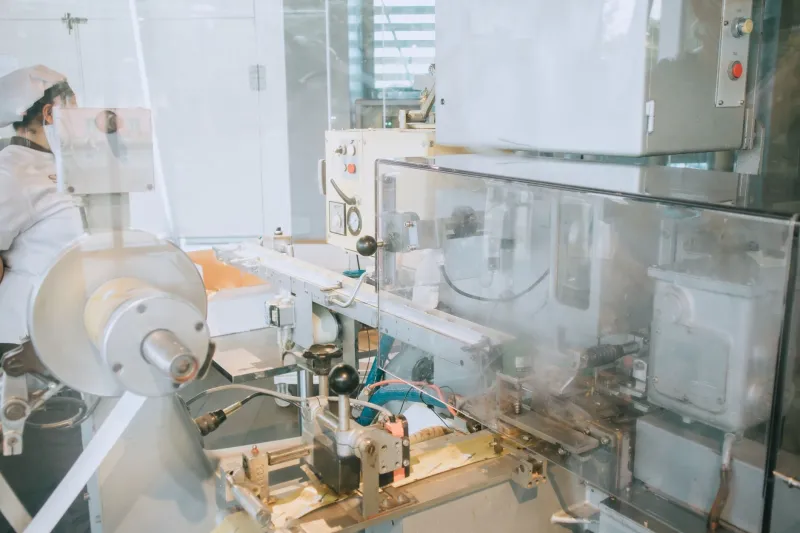
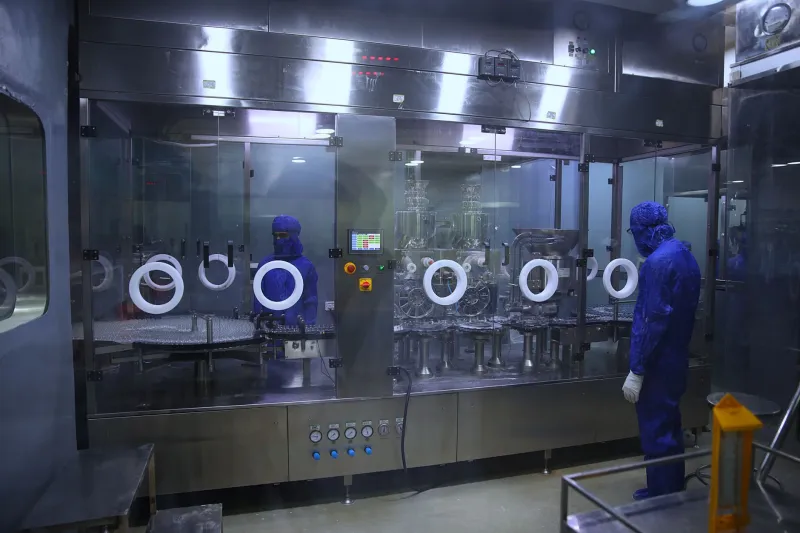
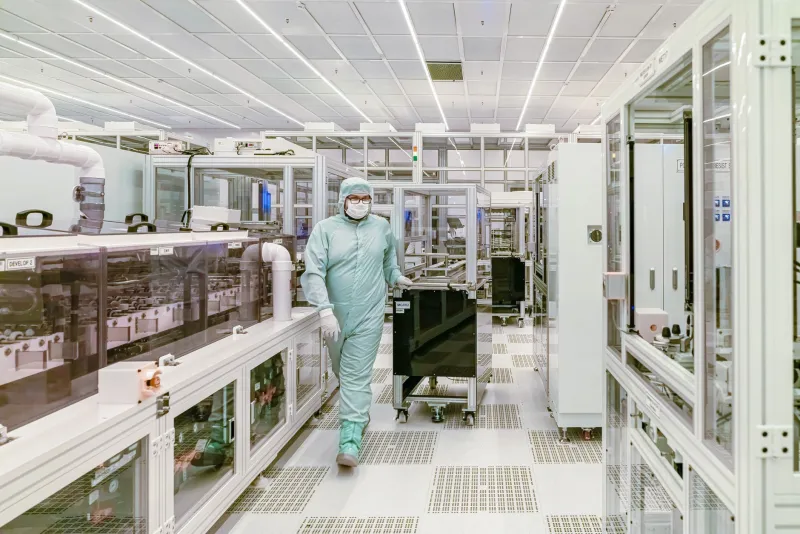
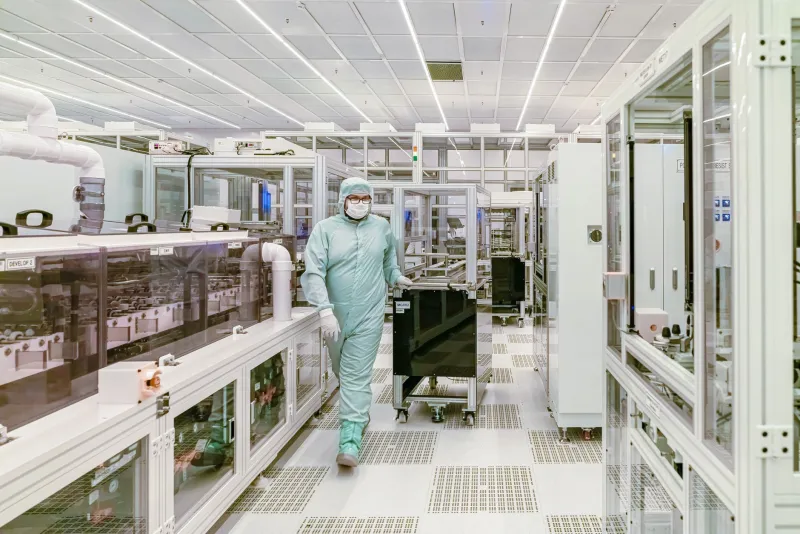
Thailand's optical manufacturing sector has demonstrated the capacity to meet both categories of demand. Facilities operating in Thailand's Eastern Economic Corridor and established industrial zones around Bangkok and Chonburi have invested heavily in computer-controlled polishing systems, interferometric testing equipment, and cleanroom environments rated to ISO Class 5 and above. These are not incremental upgrades. They represent a fundamental shift in the kind of work these facilities can credibly bid on—and win.
Industry analysts who track global optical supply chains have noted that Thai manufacturers began appearing in aerospace-adjacent procurement pipelines with greater regularity beginning in the mid-2010s, a period that coincided with significant foreign direct investment in Thailand's precision manufacturing infrastructure. By the early 2020s, that presence had solidified into something more durable: long-term supplier agreements with technology primes and research institutions that prioritize consistency and traceability over short-term cost savings.
From Consumer Electronics to the Edge of the Atmosphere
The diversity of applications served by Thai optical manufacturing is itself a testament to the sector's technical range. At the consumer end of the spectrum, Thailand produces lens modules, prism assemblies, and optical coatings that appear in smartphones, mirrorless cameras, augmented reality headsets, and medical imaging devices sold across North America and Europe. The volume requirements at this tier are extraordinary—millions of units per year, each requiring dimensional verification and optical performance validation before shipment.
At the other extreme, Thai facilities have contributed components to scientific and defense-adjacent optical systems where production runs may number in the dozens, but where each unit must be documented, tested, and certified to a degree that consumer production rarely approaches. Aspherical lens elements, custom optical filters, and precision-ground mirror substrates have all been sourced from Thailand for applications that demand exacting performance over extended operational lifespans.
Supply chain analysts point to Thailand's combination of skilled labor, established metrology infrastructure, and proximity to raw material suppliers across Southeast Asia as key factors in its ability to serve both market segments simultaneously. "You don't often find a manufacturing ecosystem that can shift from high-volume consumer work to low-volume, high-specification aerospace components without significant retooling," one industry consultant noted in a recent briefing. "Thailand has built that flexibility deliberately."
Quality Systems That Speak the Language of Aerospace
For organizations like NASA and its network of prime contractors, supplier qualification is not a checkbox exercise. It involves audits of quality management systems, review of process controls, assessment of measurement uncertainty budgets, and often, direct inspection of manufacturing facilities. Thai optical manufacturers that have successfully entered this supply tier have done so by aligning their quality frameworks with internationally recognized standards—AS9100 for aerospace quality management, ISO 10110 for optical drawing conventions, and MIL-PRF specifications for military and government optical procurement.
This alignment has required substantial internal investment. Calibrated interferometers, coordinate measuring machines, and wavefront analyzers are expensive capital items, and maintaining their calibration traceability to national measurement standards is an ongoing operational commitment. Thai facilities that have made these investments have effectively built a quality infrastructure that communicates credibility to procurement professionals who are accustomed to evaluating suppliers in Germany, Japan, and the United States.
The result is a supplier base that does not simply meet specifications—it documents, traces, and verifies compliance in ways that satisfy even the most rigorous customer audits. For US-based integrators assembling complex optical systems, this level of process discipline reduces program risk and supports the kind of long-term supplier relationships that high-stakes projects require.
The Innovation Dimension: Beyond Contract Manufacturing
A persistent misconception about Asian optical manufacturing is that it operates primarily as a replication economy—executing designs originated elsewhere, at lower cost. The reality in Thailand's advanced optical sector is considerably more nuanced. Thai optical engineers are increasingly involved in the early stages of product development, contributing to tolerance analysis, optical design optimization, and manufacturability assessments that shape final product specifications.
This collaborative engineering model has emerged in part because customers have recognized that Thai manufacturers possess process knowledge that is genuinely difficult to replicate. When a facility has polished tens of thousands of a particular lens geometry, its engineers develop an empirical understanding of how that geometry behaves under different process conditions—knowledge that feeds directly into design refinement and yield improvement. That expertise has commercial value beyond the manufacturing transaction itself.
Several Thai optical firms have also pursued independent research and development programs, exploring advanced coating technologies, freeform optics fabrication, and novel bonding methods for athermalized lens assemblies. These initiatives position the sector not merely as a capable executor of external designs, but as a contributor to the technical frontier of optical manufacturing.
What This Means for the US Market
For American technology companies, defense contractors, and research institutions evaluating their optical supply chains, Thailand's manufacturing capabilities represent a strategically significant option. The combination of demonstrated precision, aerospace-compatible quality systems, engineering collaboration, and supply chain resilience offers a compelling profile—particularly as organizations seek to diversify sourcing away from single-region dependencies.
The optics embedded in tomorrow's satellite constellations, autonomous vehicle sensor arrays, and next-generation medical imaging platforms will be manufactured somewhere. Increasingly, the evidence suggests that a meaningful share of that work will be done in Thailand—not because it is the cheapest option, but because it has become one of the most capable.
For those who follow the optical industry closely, that is a development worth examining with the same precision the industry itself demands.