The Lenses Behind the Future: How Thai Optical Manufacturers Are Powering the AR Revolution

When a consumer in Chicago or Seattle picks up a next-generation augmented reality headset and peers through its lenses at a digitally enhanced world, the last place they might think about is a precision manufacturing facility in Thailand. Yet for a growing number of the world's most ambitious AR programs, that connection is very real — and increasingly strategic.
Thailand's optical manufacturing sector has spent decades building expertise in areas that once seemed peripheral to mainstream technology: specialty lens coatings, micro-optical elements, precision waveguide fabrication, and high-tolerance glass polishing. Those capabilities, long valued in medical imaging and aerospace instrumentation, are now directly aligned with the most demanding requirements of augmented and mixed reality hardware. The result is a quiet but significant convergence between Thai industrial precision and Silicon Valley ambition.
Why AR Optics Are So Difficult to Build
Augmented reality devices impose optical requirements that have no real equivalent in conventional consumer electronics. A smartphone camera lens must be precise, but it has the luxury of digital correction and generous physical space. An AR headset, by contrast, must project crisp digital imagery directly onto a transparent lens that simultaneously allows the wearer to see the physical world — all within a form factor light enough to wear comfortably for extended periods.
The central engineering challenge is the waveguide: a thin, optically clear element that captures light from a miniaturized projector and guides it to the wearer's eye at the correct angle and intensity. Waveguides demand extraordinary surface flatness, uniformly applied multilayer coatings, and near-zero tolerance for internal defects. A single microscopic inclusion or an uneven coating layer can produce visible distortion, color fringing, or reduced brightness — any of which would render a consumer product unacceptable.
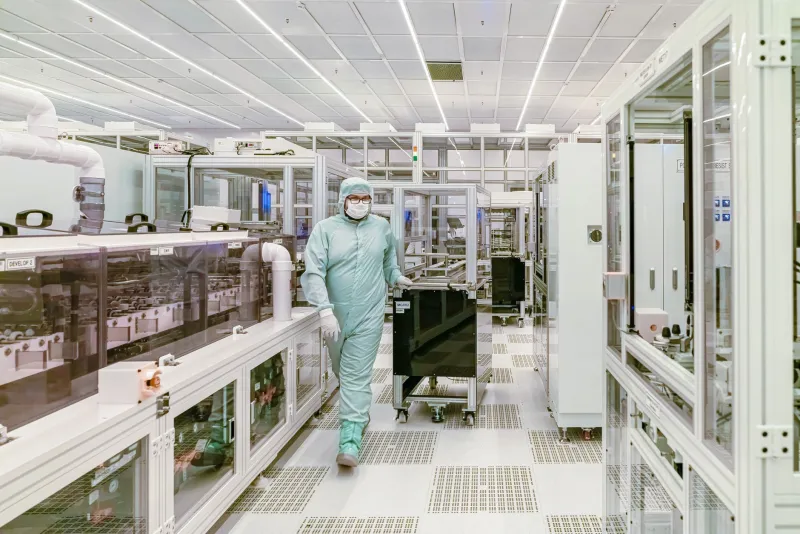
Beyond waveguides, AR systems require precisely manufactured micro-lens arrays, beam-splitting elements, and anti-reflective coatings calibrated to specific wavelength ranges. These are not off-the-shelf components. They require manufacturing environments with exacting cleanliness standards, equipment capable of nanometer-scale precision, and engineering teams with deep experience in applied optics.
Thailand's leading optical facilities have been building exactly that kind of capability for years.
The Infrastructure That Made Thailand Ready
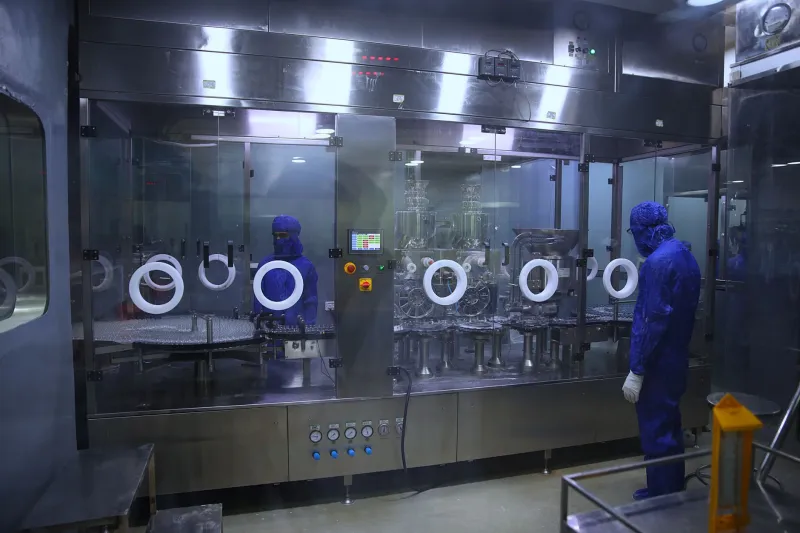
Thailand's emergence as a serious player in advanced optical manufacturing did not happen by accident. The country's optical sector grew initially around the production of camera lenses and precision instruments for Japanese and European partners, establishing a foundation of technical knowledge and quality systems. Over time, that foundation was reinforced through investment in cleanroom infrastructure, advanced coating deposition equipment, and metrology tools capable of measuring optical surfaces at sub-micron resolution.
The Thai government's support for high-value manufacturing — including incentives for research partnerships between industry and academic institutions — accelerated the development of specialized competencies. Optical engineering programs at Thai universities have produced a generation of technically trained professionals who now staff the facilities producing components for global technology markets.
For AR device manufacturers, this combination of infrastructure, expertise, and competitive cost structure represents a compelling proposition. Developing waveguide production in-house is extraordinarily capital-intensive. Partnering with an established Thai facility that already possesses the equipment, the process knowledge, and the quality certification framework allows technology companies to accelerate their development timelines significantly.
Coatings as Competitive Advantage
One area where Thai manufacturers have developed particularly notable expertise is thin-film optical coatings — the multilayer deposits applied to lens surfaces to control how light behaves. For AR applications, coating performance is directly linked to the quality of the user experience. Anti-reflective coatings must suppress internal reflections that would otherwise create ghost images. Reflective coatings on beam-splitting elements must direct specific wavelengths with high efficiency while remaining transparent to others.
Thai coating facilities have invested in ion-assisted deposition systems and plasma-enhanced processes that allow precise control over layer thickness and refractive index. The ability to deposit coatings in carefully sequenced stacks — sometimes numbering in the dozens of individual layers — and to verify their performance against tight spectral specifications is a capability that relatively few manufacturers globally can offer at production scale.
For American AR companies that have staked product roadmaps on specific optical performance targets, access to a reliable source of high-quality coated components is not a minor procurement detail. It is a foundational element of their ability to deliver.
Accessibility and the Scale Question
One of the most persistent challenges in the AR industry has been the gap between prototype performance and production economics. Early AR headsets demonstrated remarkable optical capabilities but carried price points that confined them to enterprise and professional markets. Bringing AR to mainstream American consumers requires not only technical refinement but meaningful cost reduction — and that is where the production efficiency of established Thai manufacturing partners becomes strategically significant.
As Thai facilities scale their waveguide and micro-optics production, per-unit costs decrease. Process yields improve as manufacturing teams accumulate experience with specific designs. Quality systems become more efficient as inspection protocols are refined. These incremental gains, compounded across high production volumes, translate directly into the kind of price compression that makes consumer-grade AR commercially viable.
Industry observers who track the AR supply chain have noted that the companies most likely to achieve mainstream price points in the near term are those that have secured reliable, scalable manufacturing partnerships — rather than those attempting to build optical production capability from scratch. Thai facilities, with their established infrastructure and demonstrated capacity to scale, are well positioned to serve that role.
What This Means for American Consumers
For Americans who are following the development of AR technology — whether as enthusiasts, investors, or simply curious observers — the Thai optical manufacturing sector deserves more attention than it typically receives. The headset that a major technology brand announces at a splashy press event in San Francisco may owe a significant portion of its optical performance to engineering work and manufacturing precision developed thousands of miles away in Thailand.
That is not a diminishment of American innovation. It is a reflection of how sophisticated global supply chains actually function. The companies that will bring genuinely usable, affordable AR to American living rooms and workplaces are those that understand where the world's best optical manufacturing capability resides — and build the partnerships necessary to access it.
Thailand's optical sector has positioned itself to be an indispensable part of that story. As augmented reality moves from a niche curiosity to a broadly adopted technology platform, the precision and expertise embedded in Thai manufacturing facilities will be a quiet but essential contributor to the experience that millions of American users ultimately encounter.