Light, Logic, and the Lab: How Thai Optical Engineers Are Becoming Indispensable to America's Quantum Computing Race
Quantum computing occupies a peculiar position in modern technology: universally acknowledged as transformative, yet perpetually described as years away from practical deployment. What tends to receive less attention in mainstream coverage is the supply chain question — specifically, who manufactures the extraordinarily precise optical components that quantum systems depend upon. Increasingly, the answer involves Thailand.
Across a network of precision manufacturing facilities that have spent decades supplying optical components to the aerospace, medical imaging, and consumer electronics sectors, Thai engineers are now directing their expertise toward one of the most demanding applications in the history of applied physics.
Why Quantum Computing Is, at Its Core, an Optical Problem
Popular explanations of quantum computing tend to emphasize qubits, superposition, and entanglement — the theoretical architecture of the technology. Less frequently discussed is the physical infrastructure required to make any of that architecture operational.
Many leading quantum computing architectures rely on photonic systems: lasers that must maintain extraordinary frequency stability, optical cavities that trap and manipulate individual photons, and interferometric components that detect quantum states without disturbing them. The tolerances involved are not simply tight by conventional manufacturing standards — they operate at scales where a single nanometer of surface irregularity can compromise an entire experiment.
"The margin for error in quantum optical components is essentially zero," explained one senior engineer at a Bangkok-area optical manufacturing facility with active contracts in the US research sector. "We are not talking about components that perform adequately. We are talking about components that perform perfectly, consistently, across thousands of units."
That demand for perfection is precisely where Thailand's optical manufacturing sector has found its opening.
A Foundation Built Over Decades
Thailand's emergence as a supplier to quantum research programs did not occur suddenly. It is the product of roughly three decades of accumulated expertise in precision optics, much of it developed through partnerships with Japanese, European, and American firms seeking cost-competitive manufacturing without sacrificing quality.
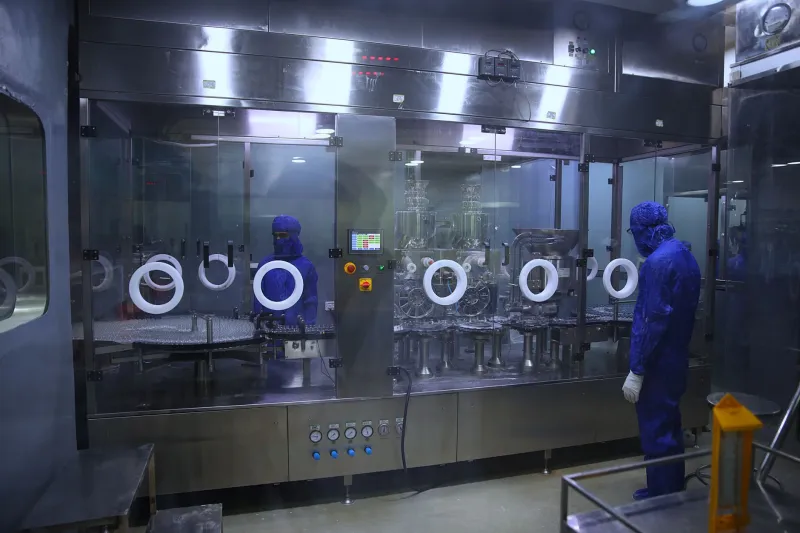
That history matters because it produced something difficult to replicate quickly: a workforce with deep institutional knowledge of polishing, coating, and alignment processes at the sub-micron level. Facilities that once produced high-grade camera lenses and medical endoscope optics have progressively moved up the value chain, investing in diamond-turning machinery, ion-beam figuring equipment, and cleanroom environments capable of supporting semiconductor-grade optical fabrication.
The transition toward quantum-relevant components — photonic integrated circuits, single-photon detectors, ultra-low-loss optical fibers, and stabilized laser cavities — represents the latest chapter in that ongoing evolution.
What US Institutions Are Actually Sourcing
Several categories of optical components have emerged as particular areas of Thai manufacturing strength within the quantum sector.
Photonic chips, which route and manipulate light signals within quantum processors much as transistors handle electrical signals in classical computing, require fabrication processes that combine semiconductor lithography with optical-grade surface finishing. Thai facilities with backgrounds in both domains have demonstrated the ability to produce these components with yields that compare favorably to more established suppliers.
Quantum sensors — devices that exploit quantum mechanical effects to measure magnetic fields, gravitational variations, or time with unprecedented precision — depend on optical components that maintain alignment stability under thermal and mechanical stress. Researchers at institutions including national laboratories and university quantum centers have noted that sourcing these components from Thai manufacturers has, in several cases, reduced lead times while maintaining the specifications required for publication-quality experimental results.
Optical cavities and etalons, used to filter and stabilize laser frequencies, represent another area of demonstrated Thai capability. The polishing standards required for these components exceed those of most commercial optical applications, and Thai manufacturers have invested in the metrology equipment necessary to verify compliance.
The Competitive Landscape and Thailand's Positioning
The global market for quantum-grade optical components remains relatively concentrated, with significant production capacity held by German, Japanese, and a small number of American specialty manufacturers. Thai suppliers are not yet dominant in this space — but they are gaining recognition for a specific combination of attributes that larger, more established competitors sometimes struggle to offer simultaneously.
Those attributes include manufacturing flexibility for small-to-medium production runs, responsiveness to custom specifications, competitive pricing relative to European and North American alternatives, and — critically — a demonstrated willingness to engage in close technical collaboration with research customers who may not yet have fully standardized their component requirements.
For US quantum research programs operating under grant-funded budgets with evolving experimental designs, that flexibility carries real value. A supplier capable of producing twenty units of a custom optical assembly to a revised specification within a reasonable timeframe is often more useful than one offering lower per-unit costs on minimum orders of five hundred.
"Research programs need partners, not just vendors," noted one optical engineer with experience supplying components to both commercial and academic quantum programs. "The facilities in Thailand that are succeeding in this space understand that distinction."
Challenges That Remain
Honesty about Thailand's current position in the quantum optical supply chain requires acknowledging the obstacles that persist. Export control frameworks, including US regulations governing certain advanced optical technologies, introduce compliance complexity that smaller Thai manufacturers must navigate carefully. Building the documentation and certification infrastructure necessary to satisfy the procurement requirements of federally funded research institutions demands ongoing investment.
Additionally, some of the most advanced quantum optical components — those incorporating novel materials or fabrication processes developed within classified or export-controlled research programs — remain beyond the current scope of Thai commercial manufacturing. The frontier of quantum optics is moving rapidly, and maintaining proximity to that frontier requires sustained investment in both equipment and human capital.
Thai manufacturers that are succeeding in this sector are addressing these challenges directly, pursuing relevant quality certifications, establishing US-based technical liaisons, and investing in research partnerships with Thai universities that have growing quantum science programs.
Precision Optics as Strategic Infrastructure
The broader significance of Thailand's emergence in quantum optical manufacturing extends beyond any individual supplier or customer relationship. As the United States invests heavily in quantum computing through initiatives such as the National Quantum Initiative, the resilience and diversity of the optical component supply chain becomes a matter of strategic interest.
A supply chain that depends on a small number of geographically concentrated manufacturers introduces vulnerability. Thai optical manufacturing — with its established quality credentials, growing technical sophistication, and geographic positioning outside the most contested nodes of current supply chain risk — represents a meaningful form of diversification.
For US quantum research institutions evaluating their sourcing strategies, and for the policymakers and program managers who oversee the infrastructure of American scientific competitiveness, that diversification is worth understanding clearly. The components that will enable tomorrow's quantum processors are being fabricated today — and a growing share of them are being fabricated in Thailand.